
Push notifications were designed as a time-saving measure: the system automatically decides what’s important and notifies you immediately. In practice, you’re constantly taken out of context, even if the notification is “smart,” personalized, and supposedly sent at the right moment. The problem lies in how they’re built into the attention architecture. Modern push systems focus not on user efficiency but on maintaining user engagement.
How smart notifications work technically
Most push systems today are built on behavioral models. The app analyzes when you most often open your screen, how quickly you respond to messages, and what actions you perform after clicking. Based on this data, the algorithm chooses the moment to send a notification when the likelihood of a response is highest.
Technically, this looks like optimization of engagement metrics: CTR, time-to-open, session length. The algorithm doesn’t understand your task context; it only sees behavioral patterns. If you respond to a notification several times while working, the system “learns” to consider this an opportune moment and reinforces the model.
When “smart” notifications create a dependency on reaction
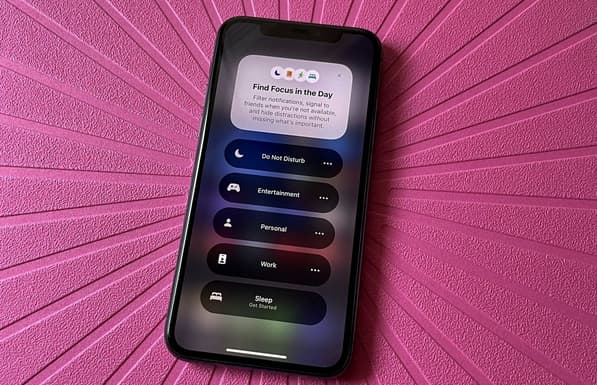
Push systems gradually shift focus from the task to the reaction. You begin to live in anticipation of the next signal: this is because the brain adapts to frequent stimuli. Especially for people working with text, code, analytics, or design, the result depends on long-term, uninterrupted attention. Over time, a habit of checking the screen without an objective reason develops: your hand reaches for the phone in between thoughts. Notifications cease to be an external tool and become an internal trigger, initiating automatic behavior.
Why the brain loses focus even from “useful” signals
Every notification triggers a micro-switch in attention. Even if you haven’t opened the message, your brain still expends resources processing it: recognizing the sound, assessing its importance, and deciding whether to ignore or respond. Neuroscientists call this cognitive switching cost—the hidden cost of switching.
The problem is that push notifications rarely arrive during logical pauses. They interrupt you in the middle of your thought process, when your working memory is already overloaded. As a result, you return to the task not with the same level of concentration, but a step lower, spending additional minutes restoring context.
Why systems don’t account for “deep work”
Modern push algorithms don’t handle the concept of deep work well. They don’t differentiate between shallow scrolling and a cognitively challenging task. If you respond to notifications while working, the system interprets this as “availability.”
The problem is that push mechanisms don’t recognize the cost of interruption. The algorithm records a click, but doesn’t account for the 10-15 minutes lost restoring context. As a result, systems optimize for short-term engagement metrics, ignoring the long-term quality of attention and cognitive fatigue of the user.
Algorithms increase fragmentation of the day
“Smart” notifications often cascade. One action triggers a chain:
- Message →
- App opening →
- Additional recommendations →
- New notifications.
From the system’s perspective, this is a successful session. From the user’s perspective, it’s a fragmented workflow. This is especially noticeable in services where push logic is tied to real-time events: chats, social networks, activity trackers, news aggregators. The algorithm adapts to micro-pauses, but it also makes them persistent, fragmenting the day into dozens of short, distracting segments.
Why push systems resist true user control
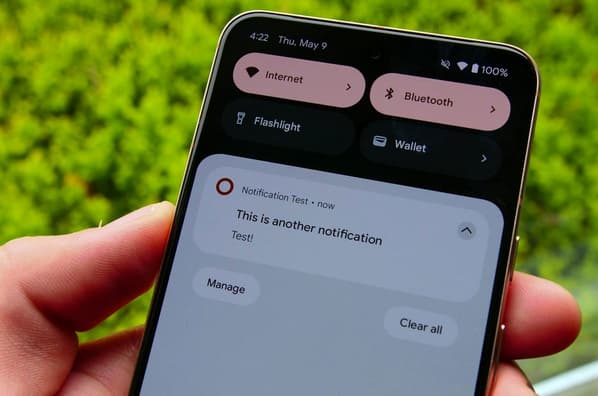
At first glance, push notifications appear configurable: you can mute categories, set priorities, or enable “focus modes.” However, most modern systems are designed to circumvent static rules. When one channel is muted, engagement logic often shifts to another—badges replace banners, summaries replace instant alerts, emails replace pushes.
This happens because notification systems are not neutral utilities; they are part of product growth architecture. Their success is measured not by how little they interrupt you, but by how reliably they bring you back. As a result, user preferences are treated as temporary constraints rather than firm boundaries. The system adapts faster than the user can recalibrate habits, which is why perceived control gradually erodes even with careful настройки.
In this sense, push notifications are less about communication and more about attention capture infrastructure—and until metrics change from engagement to outcome-based efficiency, “smart” notifications will remain structurally misaligned with focused work.
Disabling works better than filtering
Many people try to “tune” notifications: leaving important ones, disabling unnecessary ones, and prioritizing them. In practice, this rarely produces a long-term effect. The reason is simple: systems continue to adapt and, over time, find new ways to attract attention.
Strict time boundaries are much more effective. When notifications are completely disabled for specific hours, the brain stops expecting a signal. This reduces background stress and allows you to maintain attention longer than with constant filtering.