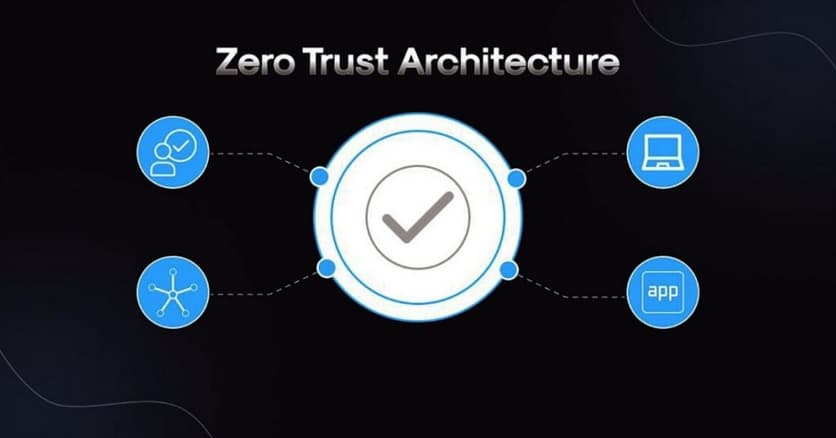
Just ten years ago, IT security was built around a simple idea: if a user or device is inside the corporate network, they can be trusted. The logic was clear—there’s “inside” and “outside,” meaning it’s enough to secure the perimeter well. This model broke down when employees began connecting from home, while traveling, from personal devices, and through cloud services. It was at this point that the concept of Zero Trust emerged—an approach based on an unpleasant but realistic assumption: you can’t trust anyone or anything by default.
What is Zero Trust in simple terms?
Zero Trust isn’t a single product or “another layer of protection.” It’s a principle by which every request is re-checked, regardless of who sends it or where it’s coming from. The system considers context: device, location, behavior, time, access rights. Even if you logged in just a minute ago, your next access attempt is still checked. Banks, cloud providers, siti scommesse senza limiti di vincita in Italy, large SaaS platforms, and services with constant traffic use Zero Trust to protect payments, accounts, and users’ personal data 24/7.

Why the old security model no longer works
The classic “trusted perimeter” model is crumbling for several reasons. First, data no longer resides in a single data center—it’s distributed across clouds, contractors, and third-party services. Second, attacks have become targeted: attackers don’t attack head-on, but impersonate legitimate users. Third, data breaches are more often caused by compromised credentials than by viruses.
Zero Trust eliminates the very idea of a “safe zone.” If an attacker has obtained a username and password, that’s not enough: the system analyzes behavioral deviations and can block access before any damage is done.

How Zero Trust changes everyday IT workflows
One of the less obvious consequences of Zero Trust is how it quietly reshapes daily work processes. Access to systems becomes more granular: instead of logging in once and receiving broad permissions, users get short-lived, purpose-specific access. For example, an employee opening a financial dashboard from a familiar device during work hours may experience no friction at all, while the same request at night or from a new location triggers additional verification.
Over time, this reduces the need for blanket admin rights and long-standing access exceptions. IT teams spend less time manually managing permissions and more time defining rules and scenarios. For users, this often feels like fewer disruptions rather than more, because access decisions are automated and context-aware instead of relying on rigid policies or emergency approvals.
What does Zero Trust consist of in practice?
While Zero Trust is a philosophy, in practice it is implemented through specific mechanisms. Companies combine several of its elements:
- multi-factor authentication (MFA) for all critical actions
- device status checks (updates, encryption, antivirus)
- the principle of least access rights—only what is needed here and now
- continuous monitoring of user behavior and services
Importantly, Zero Trust doesn’t require a complete abandonment of traditional tools. It reverses the order: first verification, then access, not the other way around.
Where Zero Trust fails if implemented incorrectly
Despite its strengths, Zero Trust is not immune to poor implementation. A common mistake is treating it as a purely technical project—deploying MFA and access controls without redesigning processes. In such cases, users face constant prompts, delays, and confusing blocks, which leads to workarounds and resistance.
Another risk lies in incomplete visibility. If behavioral analytics are poorly tuned or data sources are fragmented, the system may either miss real threats or generate excessive false positives. Zero Trust works best when identity management, device monitoring, and logging are integrated into a single decision framework. Without this cohesion, the model loses its ability to distinguish between normal variation and genuine risk.
Why Zero Trust Isn’t About Mistrusting People
Zero Trust is often perceived as strict control, but in reality, it protects both employees and the business. The system doesn’t blame the user for mistakes—it simply prevents one error from becoming catastrophic. A lost laptop, a phishing email, or a connection through an unsecured network no longer automatically means access to all internal resources.
As a result, companies gain a more resilient infrastructure, and users suffer fewer consequences from accidental errors. Zero Trust doesn’t complicate work when implemented correctly—it removes the illusion of security and replaces it with real protection.